
How to plan a one-week celebration
October 14th 2026
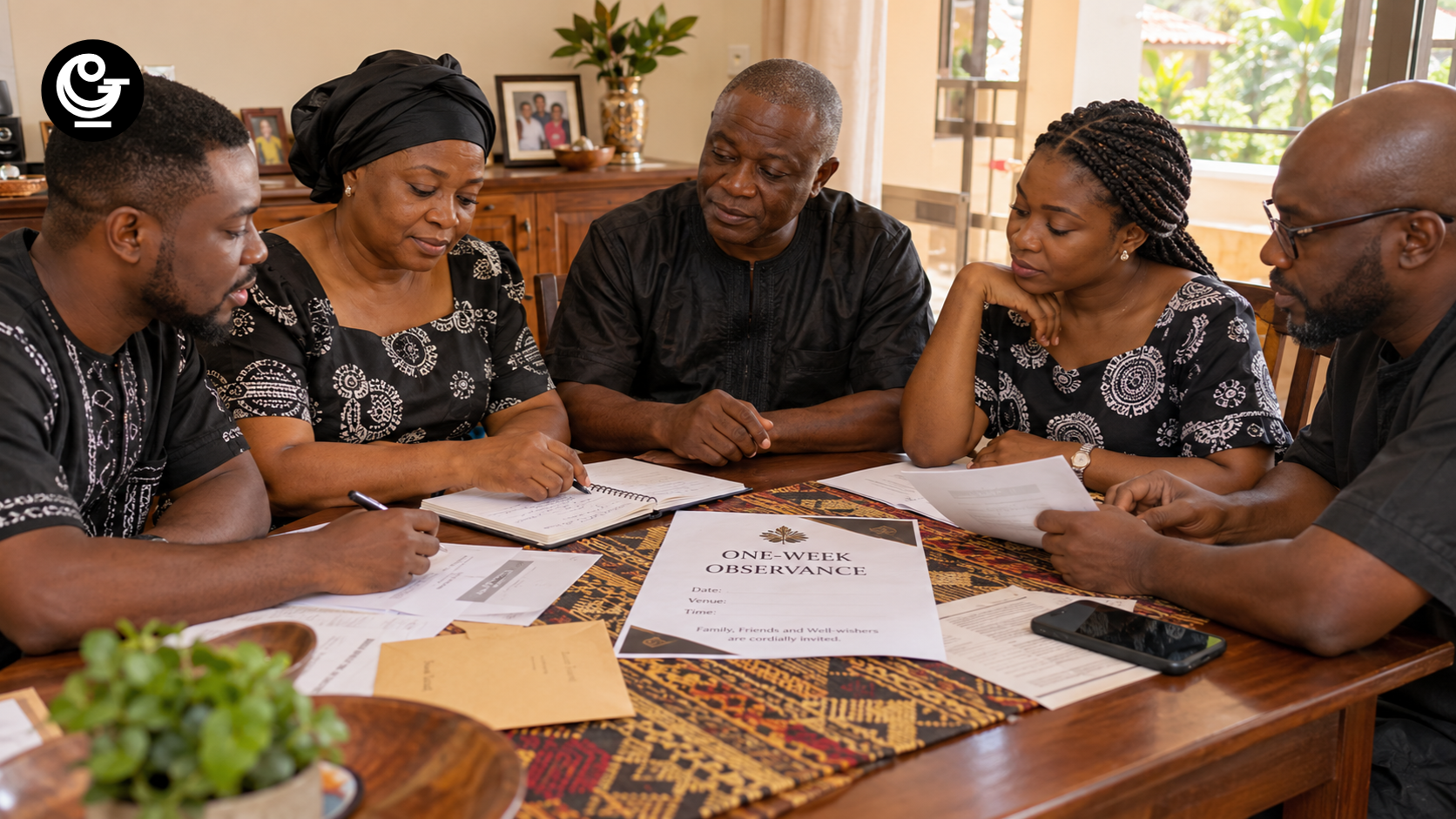
In Ghana, a one-week celebration also known as Nnawɔtwe da in Akan is an important part of the mourning period for many families, particularly within Akan communities. It brings relatives, friends and members of the wider community together after a death and can also mark the beginning of more formal preparations for the funeral.
For a bereaved family, however, organising the event can mean making many decisions within a short period. The date and venue need to be agreed, relatives informed, responsibilities shared, and practical services arranged.
This guide explains how to plan a one-week celebration in Ghana, from the first family meeting to communicating the funeral arrangements that follow.
1. Start with a family meeting
Before arranging chairs, food or notices, the family should first agree on the basic plan.
Depending on the family, discussions may involve the immediate family, extended family, family elders, religious leaders or other people who traditionally take part in funeral decisions.
The first meeting can clarify:
who will coordinate the one-week celebration;
the proposed date and time;
where the gathering will take place;
how large the event should be;
what budget is available;
which family members will be responsible for particular tasks.
Having clear responsibilities can reduce confusion later, particularly where several relatives are involved in making arrangements.
2. Confirm the date, time and venue
The one-week celebration, sometimes referred to as Nnawɔtwe da, is associated with the period around one week after the death.
Once the family has agreed on the arrangements, confirm the date, starting time and venue before sharing information publicly.
The gathering may take place at a family home, church grounds, community space or another suitable venue.
When choosing the location, consider the expected number of visitors, access for older relatives, parking, weather protection and whether there is enough space for seating and other activities.
3. Decide on the scale of the gathering
One-week celebrations can vary considerably.
Some families organise a relatively small gathering for relatives, friends and neighbours. Others expect a much larger number of people from the community, church, workplace or other social groups.
The family should decide what is appropriate for its circumstances rather than assuming that the celebration needs to be large.
A realistic estimate of attendance will help when arranging:
chairs and tents;
refreshments or catering;
water and drinks;
parking;
public-address equipment;
toilets;
photography or video.
It can also help prevent unnecessary spending.
4. Prepare a simple budget
Funeral-related costs can increase quickly when several people make arrangements separately.
It is therefore useful to prepare a working budget for the one-week celebration before booking service providers.
Possible expenses may include the venue, chairs and tents, food, drinks, decoration, sound equipment, photography, transport and the design or printing of the one-week notice.
Not every family will require all of these.
Where possible, request quotations and confirm exactly what each supplier includes. For example, ask whether the cost of tents includes delivery, setup and collection.
The aim is to give the family a clear picture of the expected expenses before deposits are paid.
5. Prepare the one-week notice
Once the date, time and venue have been confirmed, prepare the one-week notice.
The notice should make it easy for relatives, friends and community members to understand the key information.
Typically, it may include:
the name of the deceased;
a photograph approved by the family;
the date of the one-week celebration;
starting time;
venue;
directions or location information;
family contact details where appropriate.
Check all details carefully before printing or sharing the notice.
If the main funeral date has not yet been decided, do not include an unconfirmed date.
The notice can be shared through WhatsApp and social media as well as printed where the family considers that useful.
6. Inform family, friends and the community
Communication is an important part of organising the celebration.
Traditionally, information may spread through family networks, word of mouth, community contacts and radio announcements. Today, WhatsApp and social media are also widely used.
Whichever channels the family chooses, try to circulate one approved version of the information.
This reduces the risk of different dates, times or venues being shared by different relatives.
Where many family members live abroad, digital communication can be particularly useful. Include a location pin or clear directions where necessary.
7. Plan food and refreshments
Food and drinks are common at many one-week gatherings, although the scale varies from family to family.
Decide what the family wants to provide and estimate how many people may need to be served.
If using a caterer, ask what the quotation includes. For example:
food quantities;
serving staff;
plates or takeaway packaging;
transport;
tables;
water and drinks.
Do not assume that all of these are automatically included.
Families who need catering support can compare relevant providers through Ghana Funeral Services.
8. Arrange chairs, tents and sound where needed
For many outdoor one-week celebrations, chairs and tents are among the main practical arrangements.
Confirm the number of chairs, size of tents, delivery time and setup arrangements with the supplier.
If the event will include prayers, announcements, hymns or speeches and a large number of people are expected, a public-address system may also be useful.
Check whether the supplier provides microphones, speakers, a technician and power arrangements.
For a smaller family gathering, these services may not be necessary.
9. Decide how donations will be handled
Financial support from relatives, friends and community members is common in Ghanaian funeral traditions.
If contributions will be received during the one-week celebration, decide in advance who will record and manage them.
Keeping a clear record can help the family know:
who contributed;
the amount received;
who is responsible for the funds;
how the money will be used towards funeral arrangements.
This is particularly important where several family members are helping to organise the funeral.
10. Consider the programme for the day
The exact programme depends on the family's traditions, religion and preferences.
A one-week celebration may include prayers, hymns, traditional rites, family announcements, condolences and periods when guests can meet the bereaved family.
Not every gathering needs a formal programme.
If religious leaders or family elders are expected to take part, discuss the order of events with them beforehand.
This also helps the family understand when sound equipment, seating or other arrangements will be needed.
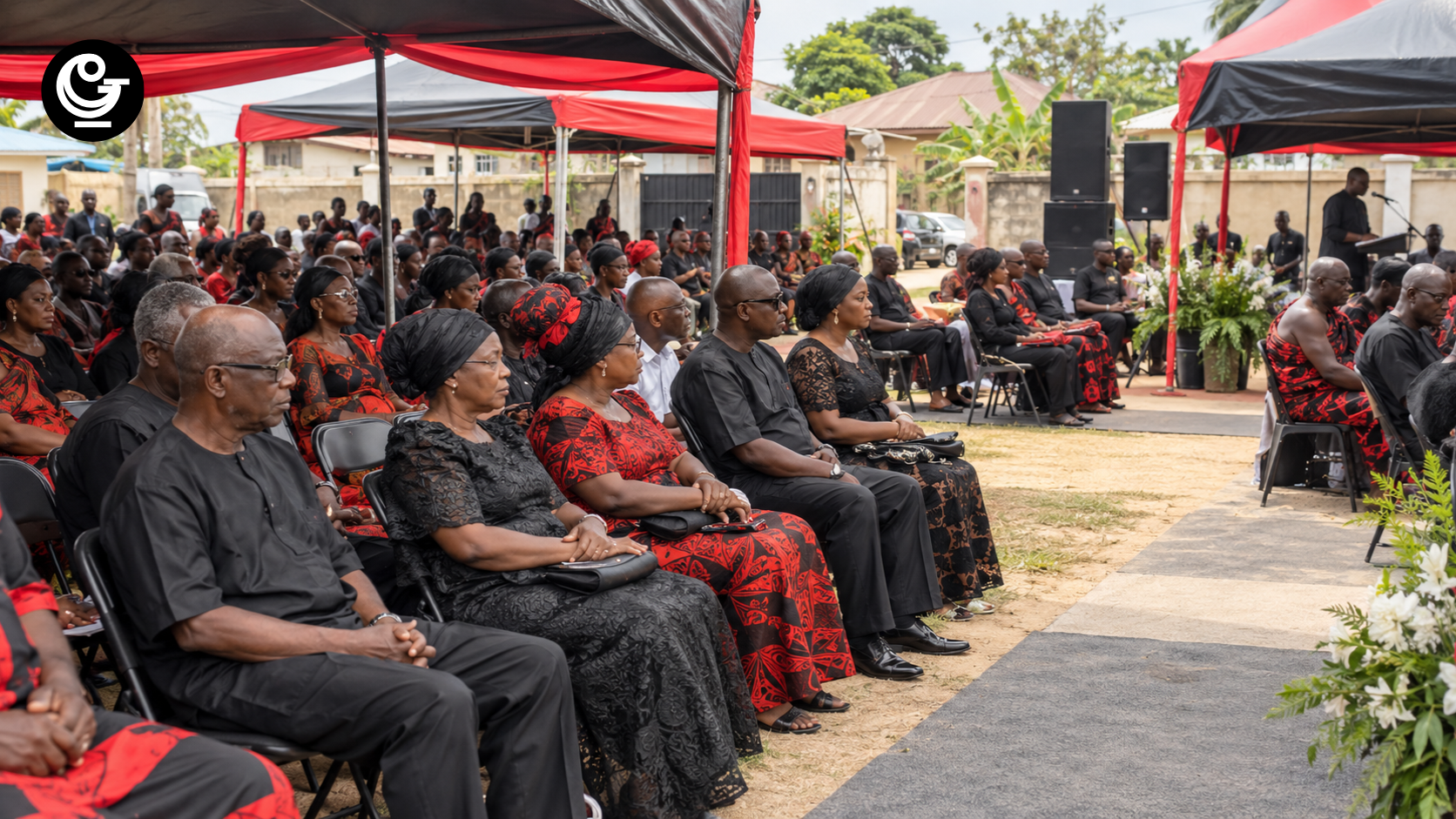
11. Use the occasion to organise the main funeral
One of the practical purposes of the one week is to help the family organise what comes next.
The family may use meetings around the celebration to discuss the main funeral arrangements and divide responsibilities.
These may include:
selecting the funeral date;
arranging the mortuary;
choosing the coffin or casket;
confirming the church or religious service;
arranging the burial location;
organising transportation;
setting the funeral budget;
arranging catering;
preparing funeral announcements and programmes;
deciding on family attire.
Not every decision has to be completed immediately, but responsibilities should be clear.
Write down what has been agreed and who is responsible for the next step.
12. Think about relatives who cannot attend
Ghanaian families are increasingly spread across different countries.
Some relatives may therefore be unable to attend the one-week celebration physically.
The family can keep them informed through WhatsApp, telephone calls, photographs or video. Where appropriate, a livestream or video call can also allow relatives abroad to participate.
Digital communication should complement the family's normal traditions rather than replace them.
Keep the planning clear and manageable
A one-week celebration brings together mourning, family support and practical funeral planning.
For families organising one, the process becomes easier to manage when decisions are made in a clear order: first agree within the family, then confirm the date and venue, set a budget, communicate the information and arrange only the services that are needed.
The celebration does not need to follow somebody else's scale or format. Family tradition, religious practice, available resources and the wishes of those involved should guide the arrangements.
Where outside support is required, families can use Ghana Funeral Services Categories to search for funeral-related providers such as caterers, funeral designers, photographers, public-address providers and companies supplying chairs and tents.
Written by: David Owusu Asante
Related Articles
Design services for digital and printed funeral materials in Ghana: Honouring life with artful tributes
Browse the post to know more and explore detailed insights on this topic.
Read MorePortable toilets for funeral events in Ghana
Browse the post to know more and explore detailed insights on this topic.
Read MoreDigital platforms for creating memorials in Ghana
Browse the post to know more and explore detailed insights on this topic.
Read MoreGrave reservation in Ghana: Securing a final resting place with dignity
Browse the post to know more and explore detailed insights on this topic.
Read More