
Funeral costs in Ghana
October 14th 2026

Funeral costs in Ghana can be difficult to estimate at the beginning of the planning process. A funeral is rarely one purchase. Instead, families may need to arrange a mortuary, coffin or casket, hearse, burial place, venue, chairs and tents, catering, printing, decoration, photography and several other services.
The final cost can therefore differ greatly from one family to another.
A small funeral in a hometown will have a different budget from a large funeral in Accra or Kumasi with hundreds of guests. The period between the death and burial can also affect costs, particularly where mortuary storage is involved.
Rather than starting with the question, “How much does a funeral cost in Ghana?”, it is often more useful to ask:
“Which services do we need, how many people are we planning for, and what will each service cost?”
What makes up funeral costs in Ghana?
There is no standard national funeral package. Families normally combine services from several providers.
Nr | Cost area | What may be included | What can affect the cost |
|---|---|---|---|
1 | Documentation | Death registration, burial permit and related paperwork | Place and circumstances of death and local authority requirements |
2 | Mortuary | Storage, preparation and embalming | Number of days or weeks, facility and services required |
3 | Coffin or casket | Local coffin, casket or customised option | Material, design, size, finish and whether locally made or imported |
4 | Hearse and transport | Transportation of the deceased | Distance, vehicle type, number of journeys and location |
5 | Burial or cremation | Grave, cemetery or cremation arrangements | Cemetery, assembly, location and type of burial |
6 | Funeral venue | Church, chapel, family house, funeral grounds or hired venue | Location, duration and facilities |
7 | Tents and chairs | Canopies, chairs, tables and setup | Guest numbers, equipment quality, transport and setup |
8 | Decoration | Funeral grounds, church, flowers, backdrop and related decor | Size of venue and level of decoration |
9 | Catering and drinks | Meals, water, soft drinks and other refreshments | Number of guests and menu |
10 | Printed materials | Posters, banners, programmes, brochures and appreciation cards | Quantity, page count, paper, size and design |
11 | Sound and music | PA system, musicians, DJs or cultural performers | Equipment, duration and performers |
12 | Photography and video | Photography, video and livestreaming | Hours, number of professionals and final products |
13 | Clothing | Funeral cloth or clothing for close family | Family decisions, fabric and number of people |
14 | Other events | One-week observance, wake, thanksgiving or anniversary activities | Family, religious and cultural arrangements |
These services also reflect the wide range of funeral-service categories found within the Ghana Funeral Services directory, including mortuaries, funeral homes, coffins and caskets, catering, hearses, funeral rentals, printing, photography and sound services.
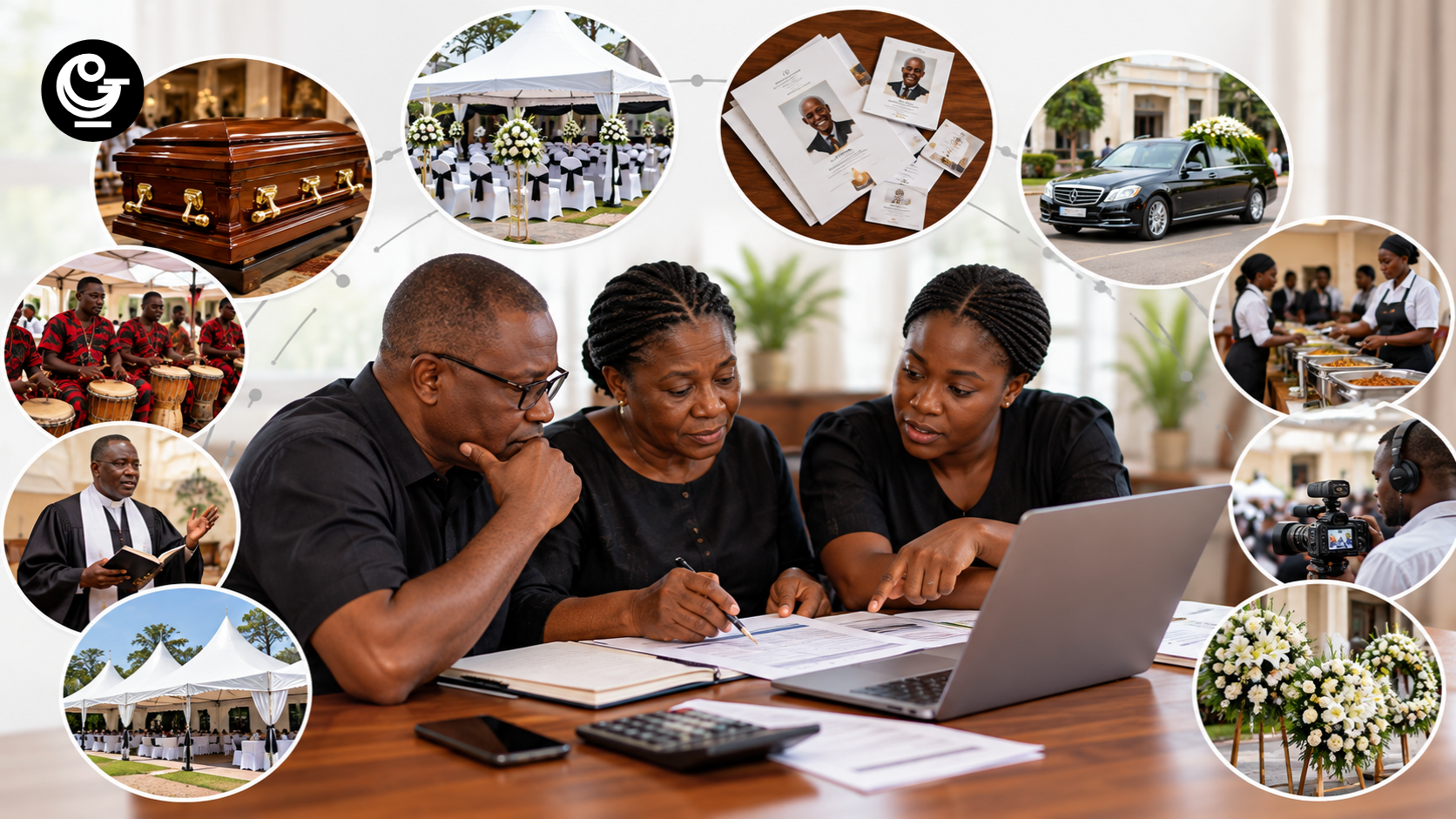
Why is there no single average funeral cost in Ghana?
Funerals in Ghana vary considerably.
Two families may use many of the same types of service but end up with very different budgets. The biggest differences often come from the number of guests, how long the deceased remains at the mortuary, the type of coffin or casket selected, catering, venue arrangements and the scale of the funeral gathering.
Location matters as well. A service provider in Accra may have different costs from a provider in another region. Transport distances can also affect quotations.
Some official charges are determined locally. For example, Accra Metropolitan Assembly's burial rules state that fees for burial permits, graves and vaults are set through Assembly resolutions. Families should therefore check the current fees applying to their particular cemetery or local authority rather than relying on an old price found online. AMA
Start with the essential funeral expenses
A useful first step is to separate essential arrangements from choices that can be adjusted.
The immediate costs normally concern the deceased: documentation, mortuary arrangements, preparation, coffin or casket, transportation and burial or cremation.
Once these are understood, the family can consider the size and format of the funeral gathering.
This approach helps prevent optional elements from being agreed before the family knows the cost of the main arrangements.
When choosing a mortuary, funeral home or hearse provider, families should also check whether the relevant facility is properly licensed. Ghana's Mortuaries and Funeral Facilities Agency, or MoFFA, regulates facilities connected with the storage, transportation and disposal of human remains. Its licensing scope includes mortuaries, funeral homes, cemeteries, crematoria and hearses.
Guest numbers can have a major effect on the budget
One of the most important planning decisions is the expected number of people.
Guest numbers affect several expenses at the same time:
catering, drinks, chairs, tents, tables, venue size, printed programmes, toilets, security and sometimes transportation.
A funeral planned for 200 people will therefore require a different budget from one organised for 500 or 1,000 people.
Families should agree on a working attendance estimate before requesting quotations from caterers and rental companies.
For catering providers, families can compare businesses through the Ghana Funeral Services directory. Find funeral catering providers on Ghana Funeral Services
Compare quotations carefully
A low headline price does not necessarily mean that one provider costs less than another.
Ask each provider what is included.
For example, a funeral-home quotation may include mortuary storage but exclude the coffin. A tent quotation may include delivery but not setup. A catering quotation may cover food but exclude serving staff, drinks or transport.
A useful quotation should make clear the service, quantity, period covered, additional charges, payment terms and cancellation conditions.
For coffins and caskets, families can compare providers and then request quotations based on the same requirements. Find coffin and casket dealers on Ghana Funeral Services
Questions to ask before accepting a funeral-service quotation
Before paying a deposit, families should establish exactly what they are buying.
Ask what the quotation includes, what it excludes, whether transport is included, whether the amount can change, what would trigger an additional charge, how much deposit is required, when the balance must be paid, and what happens if the funeral date changes.
For mortuary services, also ask when storage charges start and how they are calculated.
For catering and rentals, confirm the quantities in writing.
For printing, confirm the number of copies, pages, size, paper type, finishing and delivery date.
The aim is to make different quotations easier to compare.
Create one funeral budget for the whole family
Funeral expenses can be hard to track when several relatives arrange different services independently.
A simple shared budget can record:
service → provider → quoted cost → deposit paid → balance due → person responsible → payment date.
Keep invoices, receipts and payment confirmations together.
This is particularly useful where relatives in the diaspora are contributing to the funeral but are not physically present in Ghana.
The budget should also contain a contingency amount for expenses that were not known when planning started. However, this should not replace checking quotations carefully.
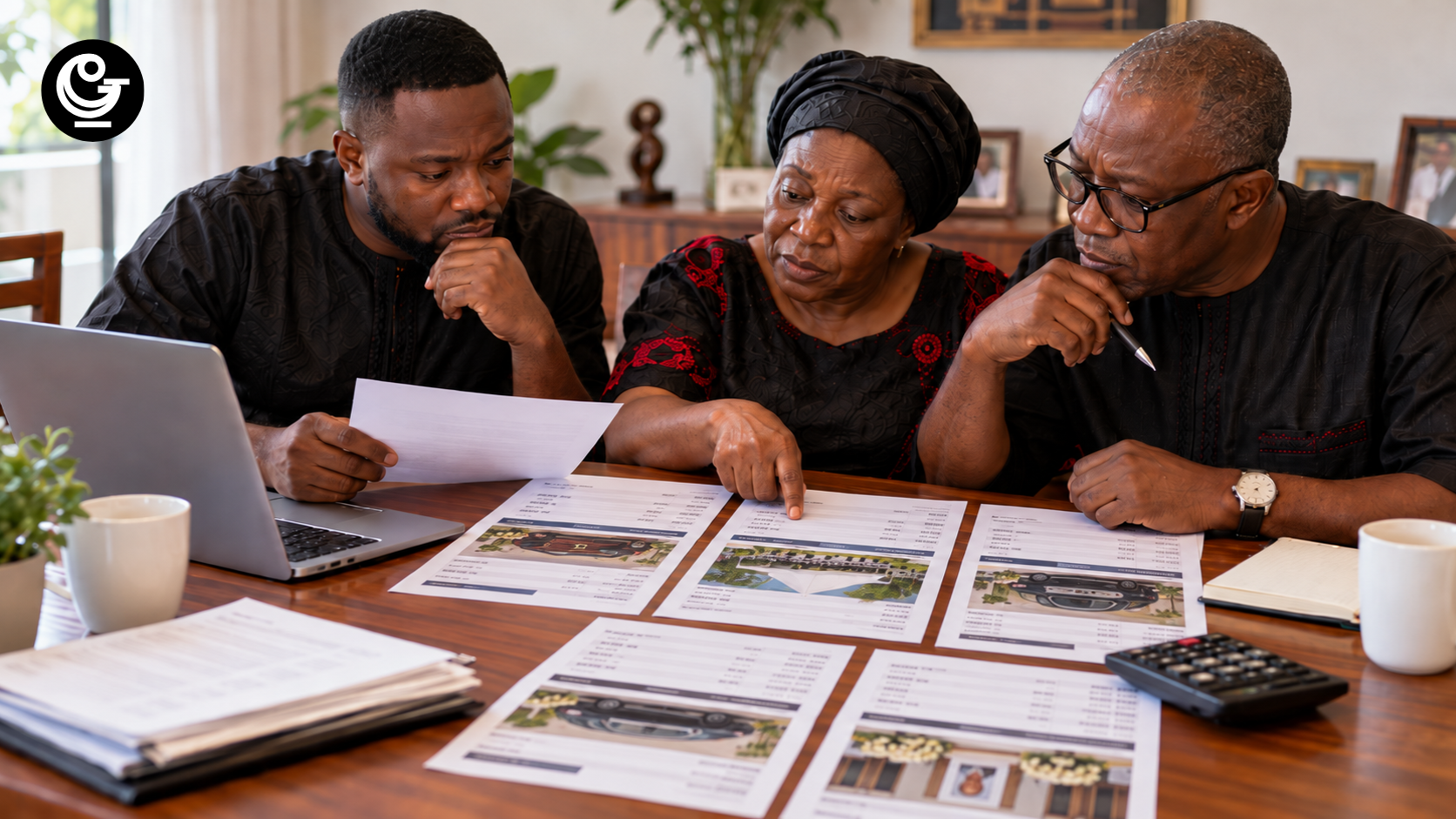
Where can families reduce funeral expenses?
Keeping costs under control does not necessarily mean removing important traditions.
Families can first look at areas where the scale can be adjusted.
Guest numbers can be reviewed. Printed quantities can be based on actual need rather than assumptions. Digital announcements can complement printed notices. Suppliers can be compared before deposits are paid. Several family members can also coordinate through one agreed budget instead of making separate purchases.
The timing of the funeral matters too. A longer period in the mortuary can mean additional storage costs.
The important point is to make these decisions deliberately rather than discovering the total after services have already been ordered.
Finding funeral service providers in Ghana
Funeral planning often involves several specialist businesses rather than one provider.
Ghana Funeral Services is structured as a directory where families can search by service category and contact providers directly.
Families can, for example, search separately for:
Mortuaries in Ghana, Funeral homes, Hearse services, Catering providers and Funeral printers.
Contact providers directly for their current services, availability and quotations.
Plan the funeral before committing to the budget
There is no single answer to the question “What does a funeral cost in Ghana?”
A more reliable approach is to identify every service the family expects to use, determine the size of the funeral, request comparable quotations and record all costs in one budget.
Start with the necessary arrangements for the deceased. Then work through the funeral gathering, catering, logistics, communication and remembrance items.
This gives the family a clearer view of where the money is going and makes it easier to decide which expenses are necessary and which can be adjusted.
For families starting the planning process, Ghana Funeral Services provides categories covering many of the service providers involved in organising a funeral in Ghana.
Written by: David Owusu Asante
Related Articles
Comprehensive guide to MoFFA forms: Implications for funeral service providers and analysis for our business
Browse the post to know more and explore detailed insights on this topic.
Read MoreEssential role of funeral directors in Ghanaian funerals
Browse the post to know more and explore detailed insights on this topic.
Read More